Bedding · A considered guide
Choosing a Comforter by Warmth, Construction, and Care
A comforter’s warmth is not a single number printed on a label. It is the combined effect of what fills it, how much fill is used, how that fill is arranged, and the conditions in which it will be slept under. The right choice is less a matter of selecting the grandest specification than of finding a useful balance: cozy without oppressive weight, breathable without feeling insubstantial, and durable enough to reward attentive care.
A bed is a small climate system. The room has its temperature, the sleeper has theirs, and a comforter intervenes between the two with varying degrees of skill. Some people want a cloud of winter warmth; others spend the night negotiating with a blanket that seems to have misunderstood the season. A buying guide can help, provided it does not treat “warmth” as a simple synonym for “more filling.”
When comparing comforters, begin with your sleeping habits and the room in which the comforter will live. Then look closely at weight, fill power, shell fabric, and construction. Sourcing and care matter too, especially for buyers who want luxury bedding to reflect not only comfort but responsibility. The details can be technical, but the decision need not be. It is a question of understanding what each detail can—and cannot—tell you.
Start with the sleeper, not the season label
“Summer,” “year-round,” and “winter” are useful starting points, not universal measurements. A summer comforter may be just right for a warm bedroom or a person who tends to overheat, yet feel too light in a drafty room. A winter comforter may be welcome in a cool house and excessive in a well-heated apartment. The same label can describe different experiences across brands because fill type, fill quantity, dimensions, and construction all vary.
Consider your own habits before considering the product language. Do you wake warm? Do you sleep with a window open? Is the bedroom consistently cool, or does its temperature change with the weather? Do you share the bed with someone whose preferred sleeping climate differs from yours? These ordinary questions often matter more than a high fill-power figure or a lavishly worded description.
If you are uncertain, think in terms of layers. A lighter comforter paired with a blanket can be easier to adjust than one very heavy comforter used throughout the year. It also makes seasonal changes less dramatic: remove a layer on warm nights, restore it when the room cools. The arrangement is not as ceremonious as owning one definitive winter duvet, but flexibility has its own quiet luxury.
Warmth is a combination of weight and loft
For down-filled bedding, two measurements commonly enter the conversation: fill weight and fill power. They answer different questions. Fill weight describes how much filling is inside a comforter. Fill power measures the loft of a given weight of down—how much space it occupies under a testing method. A higher fill-power down can create more loft with less material, which may yield a light, lofty comforter. It does not, by itself, establish that the comforter will be warmer than every lower-fill-power option.
The distinction is worth keeping in mind when reading specifications. Two comforters can have the same fill power but contain different amounts of down. Conversely, two products with different fill powers may be designed for comparable warmth by varying the quantity of fill, the size of the comforter, or its overall construction. Warmth is a result of the whole design, not one isolated number.
The word “loft” describes the airy volume that filling creates. A lofty comforter can feel substantial while remaining relatively light, but loft is not a guarantee of a particular temperature experience. Fill distribution, the shell, room conditions, and a sleeper’s own heat all play a part. If a product listing provides seasonal weights or actual fill amounts, those details can be more informative than adjectives such as “plush” or “ultra-cozy.”
Fill power: useful information, not a verdict
Fill power is especially prominent in descriptions of down comforters and pillows. In broad terms, a higher figure indicates greater loft per unit of down. This can be associated with lightness and an airy feel, qualities many people seek in premium bedding. But the number does not tell you the comforter’s total fill weight, the quality of its stitching, whether it suits your room, or how the down was sourced.
It is tempting to treat fill power as a ranking system: higher must mean better, and better must mean warmer. That shortcut can lead to an expensive mismatch. A high-loft comforter with relatively little filling may be designed for lighter warmth; another with a lower figure and more filling may provide more insulation. Product descriptions should be read as a collection of clues—fill power, weight category, construction, dimensions, and care instructions—rather than as a contest won by the largest number.
Fill type matters as well. Down clusters, feather blends, plant-based fibers, and manufactured alternatives behave differently. Natural down is known for its loft and lightness; a down-alternative fill may be attractive to people avoiding animal-derived materials or seeking particular care characteristics. Neither description alone settles questions of comfort or environmental impact. Fiber origin, manufacturing, durability, and end-of-life considerations all deserve attention.
Construction is where the comforter keeps its promises
A comforter’s internal structure determines how evenly its fill is held in place. In a baffle-box design, fabric walls create compartments with vertical depth. The walls help the filling maintain loft across each box, rather than being pressed into a flat layer. When thoughtfully made and properly filled, this construction can help reduce migration and uneven warmth.
A sewn-through design joins the top and bottom layers directly at intervals, dividing the comforter into sections. It can be lighter and less bulky, but the stitched lines create points where the fill is compressed. Some sleepers appreciate this flatter, more tailored profile, particularly in lighter-weight bedding. The trade-off is that these seams may feel cooler than the filled areas, depending on the design and the amount of fill.
“Baffle box” is not a magic phrase. Compartment size, stitching quality, fabric strength, and how much filling each section receives all contribute to performance. A well-constructed comforter should distribute its fill consistently and stay comfortable through regular use. Look for clear information on the construction rather than assuming that a named technique guarantees a particular result.
Corner loops and ties are practical details, not mere trim. They help secure a comforter inside a duvet cover and limit shifting during the night. A cover also protects the comforter from body oils, dust, and everyday soil, reducing the frequency with which the insert itself needs cleaning. If you prefer a neatly made bed, these small points of attachment can matter more than an elaborate description of the fill.
The shell has a job beyond looking beautiful
The outer fabric influences feel, breathability, durability, and how well the filling stays contained. Cotton is common in down bedding because it can be tightly woven into a down-resistant shell while retaining a familiar hand. Cotton sateen tends to feel smoother and more lustrous; percale often feels crisper and more matte. Thread count is one detail among many and should not be read as a complete measure of quality. Fiber length, weave, finishing, and construction also count.
Other shell materials can offer a different experience. A lyocell shell, for instance, may feel smooth and fluid; linen is valued for its distinctive texture and airflow. A shell’s finish may also affect its surface feel, but finish claims do not replace the basics: what the fabric is made from, how it is woven, whether it is down-proof, and how the manufacturer says it should be cared for.
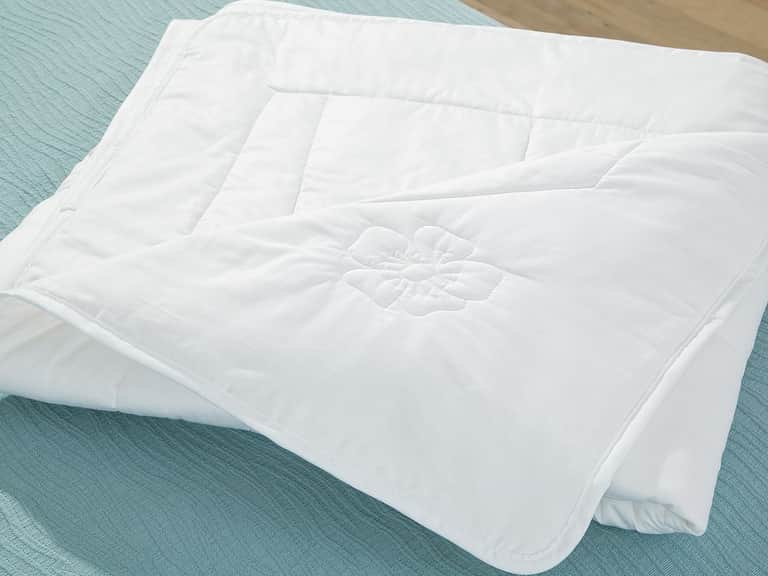
The DownTown Company Summer Linen Summer Comforter offers one example of a non-down approach to lightweight warmth. Its description specifies a cotton-linen blend fill and a cotton sateen cover, with the breathable construction intended for warm sleepers and warmer climates. The product information lists dry cleaning as the recommended care. That last detail belongs in the buying decision alongside the comfort claims: a material that sounds appealing in theory should also suit the way you are prepared to maintain it.
Ethical sourcing: ask what a claim actually covers
Luxury bedding often speaks in the language of origin, ethics, and responsible sourcing. These claims may be meaningful, but they are not interchangeable. A description of a farm, country, or region tells you something about stated provenance; it does not automatically explain how animal welfare is monitored throughout a supply chain. A certification can provide a framework for standards and verification, but buyers should check which product is certified, which stages are included, and what the standard requires.
If animal welfare is a priority, look for a named standard rather than relying on a broad phrase such as “ethically sourced.” Then consult the standard-holder’s current materials to understand its scope, audit approach, and chain-of-custody requirements. Certification systems can differ, and their rules may change. A brand’s general commitment is not necessarily proof that every component of a particular comforter is covered.
The same careful reading applies to environmental language. “Natural,” “organic,” “renewable,” and “sustainable” can refer to different attributes and stages of production. Ask whether the claim applies to the filling, the shell, the processing, or the finished item. Product descriptions can be a beginning, not the end, of the inquiry. When information is vague, the most responsible conclusion is not to fill in the blanks on a brand’s behalf.
The Clean Bedroom and St Geneve illustrate why product-by-product examination matters. Their descriptions include differing construction details, sourcing statements, and care guidance across particular bedding items. Such claims are best understood in their specific context: identify the exact model, read its current specifications, and distinguish the stated attributes of that item from assumptions about an entire brand or category.
Care begins before the first wash
The easiest way to care for a comforter is to keep it from needing frequent cleaning. A duvet cover acts as a removable first line of protection; regular airing and gentle fluffing help refresh the bedding between washes. Follow the care label and the manufacturer’s instructions, because washing recommendations differ by fill, shell, construction, and size.
Down and other insulating fills need to dry thoroughly after cleaning. Residual moisture can encourage odor and damage the comforter, while heat that is too high may harm fabric or filling. Large inserts may be poorly suited to a domestic machine, even when a listing describes a product as washable. When in doubt, ask the manufacturer or a cleaner experienced with down-filled bedding before proceeding.
Spot cleaning can be a sensible response to a small mark, but moisture must be removed completely and the fill allowed to dry. For more extensive cleaning, professional service may be the safer option. A product with dry-clean-only instructions, such as the Summer Linen Comforter described above, calls for a different maintenance routine from a machine-washable pillow or cover. The care label is not a suggestion to be overridden by habit.
Storage is another quiet test of good judgment. Store a comforter clean and fully dry in a breathable fabric bag or cotton cover. Avoid sealing natural textiles in plastic for long periods, where trapped moisture can become a problem. Give the comforter room rather than compressing it tightly; preserving loft is part of preserving its performance.
A practical comparison checklist
Before choosing a comforter, gather the details that answer the questions most likely to matter in your bedroom:
- Warmth category: Is the product described as summer, year-round, or winter weight, and does that match your room and sleep habits?
- Fill and fill amount: What material is used, and is the actual fill weight listed for the size you need?
- Fill power: If the comforter contains down, what does the figure tell you about loft—and what does it leave unanswered?
- Construction: Is it baffled, sewn-through, or made with another chamber design? Are there details about fill distribution and attachment loops?
- Shell: What fibers and weave are specified, and does the fabric feel suitable for your temperature preferences?
- Sourcing: Are claims specific, and does a named certification cover the product and the issue you care about?
- Care: Can you follow the cleaning and storage guidance with the equipment and services available to you?
Choose for the nights you actually have
The best comforter is not necessarily the warmest, loftiest, or most expensive. It is the one whose performance fits the room, the sleeper, and the routines of daily life. A high fill-power down comforter can be an elegant choice, but its value depends on the amount of fill, the construction, the sourcing information, and whether its care requirements suit its owner. A breathable non-down comforter may be the more intelligent answer for someone who sleeps warm or prefers a different material.
Read the label with curiosity rather than reverence. Ask what each specification means, what the product description does not say, and how the comforter will behave after months of ordinary use. Warmth, construction, and care are not separate chapters in a buying decision; they are the same decision viewed from three sides. A well-chosen comforter should make itself nearly unnoticeable at night, leaving the sleeper with nothing more complicated to consider than whether the window should stay open.